

- Εγγραφή
- 18 Οκτωβρίου 2014
- Μηνύματα
- 6.860
- Reaction score
- 18.228
- Πόντοι
- 1.287
- Περιοχή
- Vallée de Chevreuse
H ιδέα είναι από το βρετανικό ιστότοπο του Τζούλιαν Μαρς, που αναπαράγει το παρακάτω άρθρο του βρετανικου CAR (1991)
Συγκρίνει GS με ZX... Σημείο προ σημείο!
THE MOST COMFORTABLE SMALL CAR in the world, people said. Others went further: the best small car of all (well, that or the Alfasud). Certainly the Citroën GS in its early years was the most aerodynamic the most technically advanced, the purest in design and the most distinctive. But that was all a terribly long time ago. Now, after an interregnum of six years since the last GSAs. Citroën is back with the ZX, a new car to sit in size and price between the AX and BX, embodying what is, for the company, new thinking.
The ZX, in direct contrast to the GS, is calculatedly conventional. It’s a rather dull-looking five-door hatch powered by a four-cylinder transverse in-line water-cooled engine, its front wheels driven via an end-on gearbox, suspended on steel-sprung MacPherson struts, and its rear axle on trailing arms. Brakes are servo-assisted, using discs and drums on this basic 1360cc Reflex model. So what's new? Chiefly, a rear subframe mounted on bushes that deform in a shrewdly designed way during high sideways load, causing the rear wheels to turn slightly in the same direction as the front pair to improve cornering stability. It’s worth boasting about, and it works, but it's not unique. Also, some ZX models - but not this one - have a sliding and reclining rear seat, novel for a European car.
The GS has a four-door fastback body of remarkable aerodynamic efficiency, and a longitudinally mounted air/oil-cooled flat-four ahead of the front wheels. Front suspension is by double wishbones, rear by trailing arms, with interconnected self-levelling hydropneumatic springing/damping units at each corner. The high-pressure hydraulics also power the all-disc brakes, inboard at the front. There are more surprises: the steering axis passes exactly through the tyres’ contact patches so that the car continues in a straight line after a front tyre blow-out, there is a remarkable degree of anti-dive provided by the suspension geometry, and the rear brakes are pressurised by the rear suspension fluid so that their action is proportional to the car's load.
The GS tested here isn't quite like they were two decades ago. The GS first came with engines of 1015cc and 1222cc, designed with an eye to French taxation rather than performance. They were astonishingly high-revving, short-legged cars. This GS is the later X3 model introduced in 1978, its engine expanded to 1299cc in an attempt to help the 65bhp engine's torque and economy. It's still short-geared:15.4mph per 1000mph in top (fourth) means a 5500rpm motorway cruise is possible but deafening. But, apart from the bigger engine, the revised rear lamps and the ghastly seat trim, the X3 is as the GS was at the outset.
This car is owned half-and-half by me and deputy editor Richard Bremner, and we didn't set out looking for an X3 — we just wanted to buy a well-preserved GS of almost any description before they all rotted away.
Start up, and you know you're in something unconventional. it's not just the absence of water temperature gauge that points to the cooling method: there being no sound-absorbing liquid jacket, this is one loud engine. But it's a nice sound, remarkably like a pair of 2CVs or, if you prefer (and l do), two-thirds of a 911. Horizontally opposed engines, all of them, have a lovely soft-edged sound that rises in pitch and volume higher up the rev range while avoiding any harshness. They sound as though they'll never break.
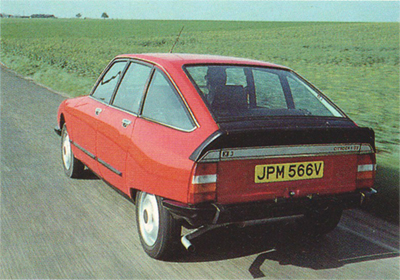
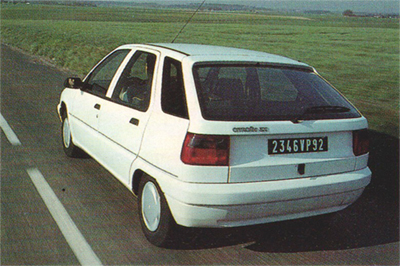
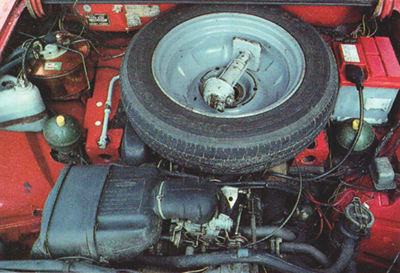
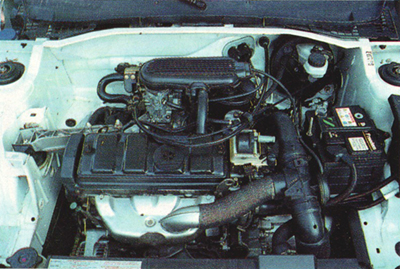
Performance of G5 (top) and ZX is similar, new car’s greater torque offset by longer gearing.
ZX cleaves air quietly. Tyre noise. too, is well suppressed. GS falls down on refinement: it suffers noise from wind, tyres and engine. GS has a longitudinal 1299cc air-cooled flat four, ZX 1360cc transverse water-cooled in-line four
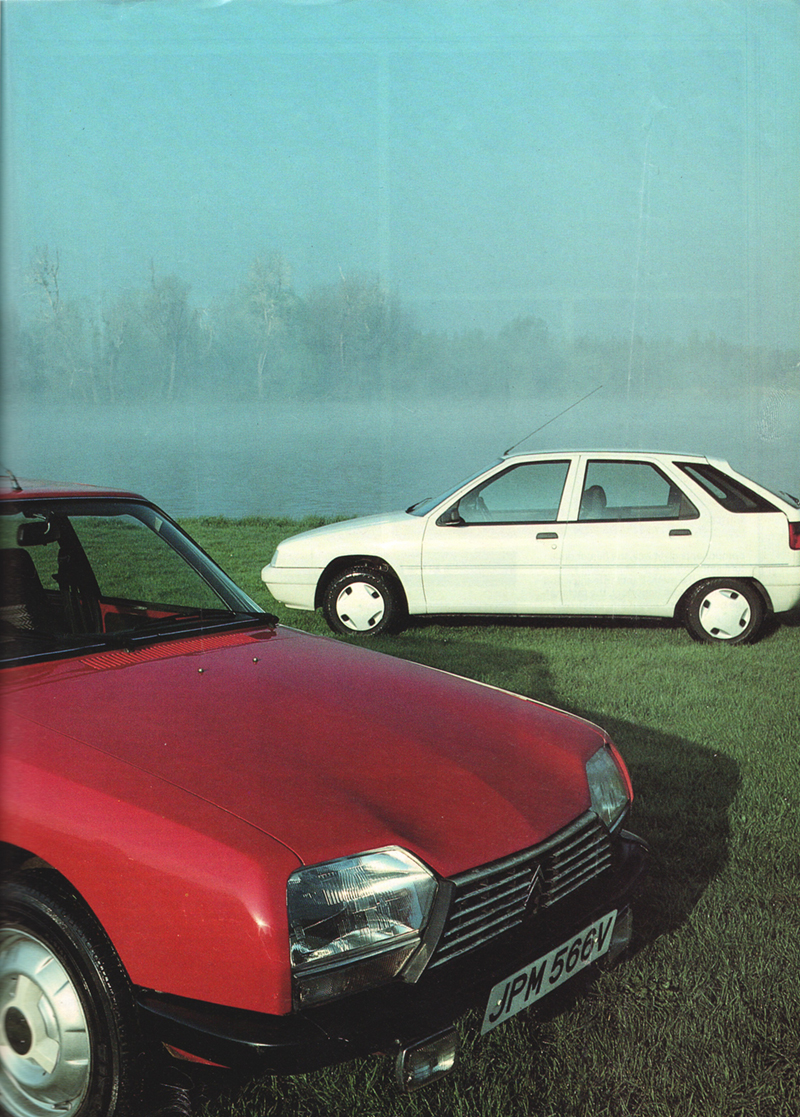
The ZX's engine, though a deal quieter in the middle ranges, isn't so nice to use as it turns rough when you push it, so you adopt a different technique when trying to get along briskly, using higher gears (you've five to choose from) and lower crank speeds. Performance of the two cars is very similar, the ZX's greater torque of 85lb ft against 72lb ft being offset by slightly longer gearing, while both cars weigh 19.5cwt.
Its uncouth engine apart, the ZX is clearly ahead of the 1991 class standard for refinement. It cleaves the air quietly, even though its drag coefficient, at 0.32, certainly doesn't reflect two decades’ progress from the GS's 0.34. Tyre noise is very well suppressed. There's no steering kickback or transmission shunt, and the gearshift has a light, clean-slicing action. It's an easy car to drive.
It's leagues ahead of the GS in refinement. The old car falls down badly here - by far its biggest drawback on the road. Beyond 70mph, the wind whips up a cyclone roar, accompanied by bad tyre noise and a shriek from the gears, yet still the engine's voice is strident enough to be heard above the cacophony. The gearchange is light and quick, but hasn't had the rough edge taken out of its action, and there's enough backlash in the driveline to demand great circumspection from the driver coming on and off the throttle.
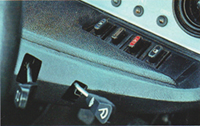
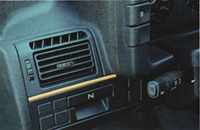
Two decades have seen ergonomics move forward, of course. The GS dash is a right mess, and badly made with it. But the car's driving position is fine, and slim pillars impart airiness and visibility. The ZX counters with easily found, illuminated switchgear and proper modern heating and ventilation, where the GS has a weak-willed set-up directed by a scattered set of levers that sprout from roughly carved gashes in the frangible plastic facia.
Citroën badly wants the ZX to appear well made, and it does. Although the company's claim that it's the best in its class represents a combination of innocent naivety and cynical marketing hype (the seat trim and dash are of cheapo materials), the fact is the facia components all fit well, the heater dials turn smoothly, the glass is neatly semi-flush and the metal panels are thick and well fitting. More important, the fact that the body doesn't boom and crash over bumps is a great step forward for Citroën.
In the GS, you hear bumps, and feel them through the steering wheel. There's also some harshness over small, sharp bumps such as Catseyes. But real lumps, undulations, pot-holes, cobbles and broken surfaces are simply swallowed. No car today— up to limousine size - is so soft, and yet the GS seldom floats. To the owner of a backside accustomed to the jarring rides of modern small cars, it's amazing. On top of which, the car is unaffected by load.
By modern standards, the ZX rides well. It is resilient, moving up and down but taking the edge off things well. There’s none of the lurching and thumping a German car would serve up on lumpy French roads. Its big fault is an uncomfortable lateral rocking, brought about because the car, though softly sprung, is quite stiff in roll. Anti-roll bars are simply lateral springs, and undamped ones at that, so when one side of the ZX is disturbed the whole thing rocks. The GS, like the ZX, has anti-roll bars at each end, hut they are far less influential.
Ride quality, though, is but one element in the sum of comfort. Both cars have soft, generous seats, good driving positions and adequate cabin room. The GS has better rear-seat headroom, the ZX the better legroom, though for back-seat roominess, it's shamed by the Tipo.
In packaging, the two Citroëns are remarkably similar. The ZX is 160in overall, the GS two inches longer, the wheelbases are the same, the heights similar, yet the GS has the bigger boot by 45 percent when the ZX’s rear seat is up.
No progress there in 20 years. But surely all this softness in the GS must make it handle like an inebriate camel? Not a bit of it. Sure, it rolls onto its door handles, but it clings on amazingly well with its round-shouldered tyres, understeering insistently at the limit.
There's excellent directional stability yet neat turn-in: the steering is very direct and accurate, though you pay a price in having to put up with kickback and a marked weighting-up in bends. The GS‘s big 15-inch wheels help the ride and give a reasonably big contact patch from 145-section tyres.
The ZX rolls less, as it must in order properly to exploit modern lower-profile 165/70 13 tyres. Drive the ZX’s contemporaries and you'd call its steering light, quick and accurate, but after the GS‘s it feels a tad rubbery, which must be the pay-off for losing the kickback. Still, the ZX turns into bends eagerly enough, and then brings its self-steering axle into play by tracking around the arc with remarkable tenacity and even-handedness — tucking in only gently even when you throttle right back – and gripping very strongly. Its two-stage cornering action feels odd at first, but you soon learn to like it — a real Citroën characteristic, you might say.
The ZX doesn't have real Citroën brakes; the GS does, and is the better for it. On almost no pedal travel, the GS discs have sharply honed initial bite, great power and perfect progression, aided by the car's remarkable resistance to front-end dive. Their high-pressure hydraulics can also be cheaply adapted to ABS, and have been on the BX and XM. The ZX’s stoppers work well enough but feel spongy beside conventional opposition's and especially so beside the GS's.
So just what does Citroën have to show for 20 years‘ developments? To look at, drive or sit in the two cars here, you'd be hard put to find much beyond the refinement angle. But look at the costs.
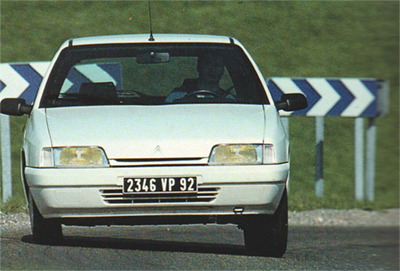
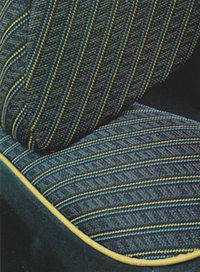
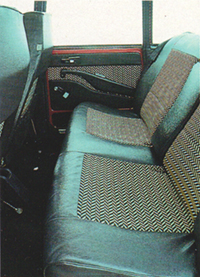
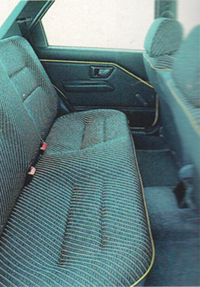
Soft suspension has GS (top left) rolling around bends, but it holds road well. ZX turns in eagerly, corners evenhandedly. Rear seats are soft and
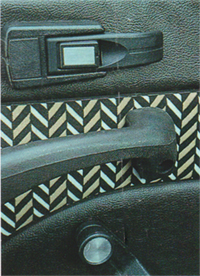
generous in both cars, their cloth trim showing Citroën hasn't lost its taste for garish colour. GS has switches scattered over Its messy clash. ZX's facia is neater —has better ventilation (above)
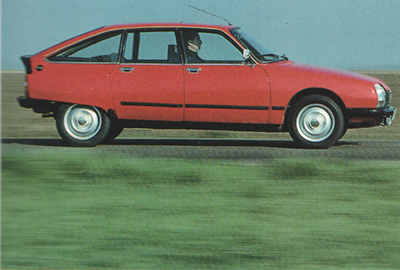
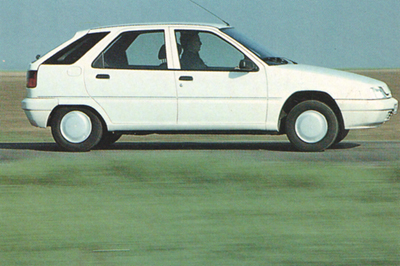
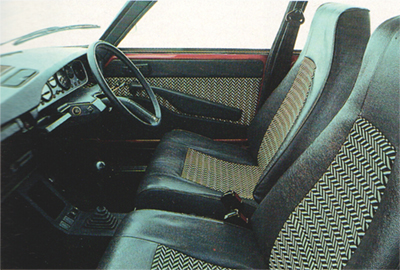
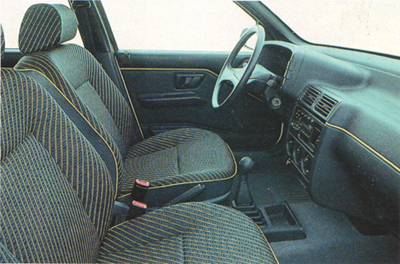
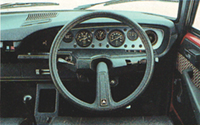
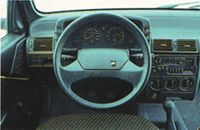
In its youth, GS was most distinctlve car around, and the most aerodynamic. Its 0.34 Cd compares well wlth ZX's 0.32. New car's design is calculatedly conventional. Both cars have good driving positions and adequate cabin room. Not only ls GS’s dash a mess, it’s also badly made. ZX’s facia (above) is blander but better to use
The GS's 27 to 32mpg isn't too clever when you’d be doing nearer 40 in the ZX, and an early GS's 3000-mile service interval would horrify a 1991 owner. A GS would need 30-odd hours‘ servicing in its first 60,000 miles whereas this ZX gets by on 5.5 hours plus oil-changes. You'd swear maintenance wasn't given a second thought when they designed the GS - the distributor is so badly sited you need to remove it to check the points – yet the BX proves that with modern design, electronic ignition and today's lubricants, the care of a hydropneumatic car needn't be a problem.
The GS is reliable if cared for, and mechanically durable, but in damp, salty Britain its body disappears like April . TheZX is carefully designed to eliminate rust—traps, and 75 percent of its steel is galvanised or electro-plated. It should last well and when it's done for, its constituent parts will be labelled for recycling.
The ZX is strong, having a very rigid floor and three hoops over the cabin for stiffness and rollover protection. It is claimed to be safe in 35mph frontal impacts where the law demands 30mph, and to deal with offset crashes, too, for which there is no legislation. The GS isn't bad in its crash resistance. but the ZX is better. Yet in primary safety, the ability to avoid the crunch, the GS lags little.
‘I can’t imagine,’ said someone from Citroën at the ZX‘s launch, ‘that anyone who drives our car will have anything to complain about.’ Well I, for one, will grumble. However good the ZX may be (and it is very good), it's not a car to hold your interest. As far as Citroën is concerned, it's hardly a car at all. It's a product, an appliance, carefully tailored to existing consumer demand in market segment Mi. The buyers know what they like, and Citroën has inferred that they like only what they know. So the ZX is just what they know, a little better all round, but no different. It is, in short, a marginally improved competitor to Bland X.
Citroën makes cars to make , and we can't blame it. There's only sense in building something different if it can be economically made and abundantly sold. The danger the ZX faces is its perilously short potential lifespan: before long there’ll be a new Golf, a new Astra, a new 309, several new Japanese, and any or all of these could well better the ZX, leaving Citroën floundering for a replacement.
The GS, by being different, has qualities that haven't been bettered in 20 years, and perhaps never will be. Its faults are evident and manifold: it is unrefined to drive and, though reliable, is extravagant in its demands for fuel, care and attention. But all of these could surely be cured by modern design and engineering, without abandoning hydropneumatic systems, adventurous styling and sophisticated (though not necessarily complex — the GS isn't complex) engineering. The very thought of it all makes the ZX seem like a wasted opportunity.
Paul Horrell
This was one of four articles in this issue comparing then current models with their predecessors from twenty years previously. The other comparisons were Jaguar XJs with E-Type, Audi 100 with NSU Ro80 and Alfa 33 4WD with Alfasud.
These are the conclusions:
Cost
WE'RE PAYING A LOT MORE FOR OUR CARS now than we did 20 years ago, once you take inflation into account.
Example: in 1971, an Escort 13O0XL cost £1004 including tax, whereas today's Escort 1.4LX is £10,125. In the meantime, the Retail Price Index has risen so that £1.00 in 1971 would buy what £6.74 buys now. Thus you might expect today's Escort to cost just £6767.
Similar figures apply pretty well right across the spectrum. In '71, a Jaguar XJ6 4.2 auto was £2969; multiply that by 6.74 and you'd expect to pay £20,011. Instead, Jaguar asks £29,880 for an XJ6 4.0 auto. The table gives more examples of then-and-now prices; in each case, there's a gap between what inflation would lead you to expect to pay, and the actual price now ~ and sometimes it's a chasm: an Austin 1800 (£1246) points to a price for a base Rover 820i of £8398 not the actual £17,181.
Don't imagine the recent VAT increase signals an overall rise in tax. In 1971, you paid 30.7 percent purchase tax; now, it's roughly 8.0 percent special car tax (actually 10 percent of wholesale price) with 17.5 percent on top, amounting to 26.9 percent in all.
Car makers would have you believe labour costs have gone through the roof, but in fact Ford's line workers were paid 75.5p an hour in '71 ; now they average £5.89 - only a small real increase. And Ford in Britain turns out roughly twice as many cars per employee now as it did then.
Perhaps greater sophistication and better equipment could justify higher prices. Our pair of Escorts again: the difference between the expected price extrapolated from '71 and the actual '91 price is £3358. What do you get for it? In '71 you suffered a pushrod motor and cart-sprung live rear axle, and you paid extra for servo-assisted front disc brakes, cloth seat trim, a heated rear window, radial tyres and AM-only radio. Today's 1.4LX - which has all-independent suspension, a five-speed gearbox and an ohc engine – includes as standard an array of goodies the '71 car had to do without: halogen headlamps, sunroof, electric front windows, rear foglamps, intermittent wipe, rear wiper, door mirrors, locking fuel filler, side window demisting, reclining seats, clock, tripmeter, stereo radio-cassette player, hazard flashers, boot light and burglar alarm. An impressive list, but is it worth £3358?
Styling, Engineering
OVER THE PAST TWO DECADES, THE choice available to buyers has been lamentably narrowed. We've already examined (CAR, July 1990) the way in which cars are looking more and more alike – a trend that's not convincingly justified by the demands of their aerodynamics or safety.
The real reason could be called prudence or cowardice: manufacturers simply refuse to build adventurous designs in case they turn out heroic failures, opting instead for the safe course of building near-clones of what's already selling well.
Under the sheetmetal, the convergence between manufacturers is even clearer. Certainly, the transverse engine is good for interior space, and front-drive bestows both roominess and predictable handling, the coil-sprung MacPherson strut is cheap to make and compact. But is this really such a magic formula? In the '70s, we were offered particular engineering solutions to particular problems; nowadays every car's much the same. In 1971, Fiat sold the rear-engined 850, the front-engined, front-drive 127 and 128, the rear-engined, rear-drive 124 and 132, and the V6 130. The X1/9 and 126 followed in '72. Now, there's little fundamental variation in engineering from the upcoming
Cinquecento microcar through the Panda, Uno, Tipo and Croma -taking in the Lancias Y1O, Dedra and Thema on the way. In '71, Lancia offered narrow-angle V engines, flat-fours, transverse leaf suspension, and coachbuilt coupés.
There are some modern exceptions to this oppressive conformity. The Metro’s fluidsuspension; the Renault Espace's space utilisation and unique body construction; the Lotus Elan's bold styling and clever front-drive engineering; the Citroen XM's step-ahead suspension; the Honda NSX’s radical aluminium construction; the Audi Quattro’s four-wheel drive — none of these features has hampered sales success.
Detail engineering has moved on, of course. We now have widespread fuel injection, electronic ignition, ABS, turbos, better bumpers, flush glazing, rear-wheel steering (whether active as with Honda, Mazda and Nissan, or passive as with Porsche, VW and Citroën), better auto gearboxes and smoother diesels. But revolutions have been too few, we think.
Συγκρίνει GS με ZX... Σημείο προ σημείο!
THE MOST COMFORTABLE SMALL CAR in the world, people said. Others went further: the best small car of all (well, that or the Alfasud). Certainly the Citroën GS in its early years was the most aerodynamic the most technically advanced, the purest in design and the most distinctive. But that was all a terribly long time ago. Now, after an interregnum of six years since the last GSAs. Citroën is back with the ZX, a new car to sit in size and price between the AX and BX, embodying what is, for the company, new thinking.
The ZX, in direct contrast to the GS, is calculatedly conventional. It’s a rather dull-looking five-door hatch powered by a four-cylinder transverse in-line water-cooled engine, its front wheels driven via an end-on gearbox, suspended on steel-sprung MacPherson struts, and its rear axle on trailing arms. Brakes are servo-assisted, using discs and drums on this basic 1360cc Reflex model. So what's new? Chiefly, a rear subframe mounted on bushes that deform in a shrewdly designed way during high sideways load, causing the rear wheels to turn slightly in the same direction as the front pair to improve cornering stability. It’s worth boasting about, and it works, but it's not unique. Also, some ZX models - but not this one - have a sliding and reclining rear seat, novel for a European car.
The GS has a four-door fastback body of remarkable aerodynamic efficiency, and a longitudinally mounted air/oil-cooled flat-four ahead of the front wheels. Front suspension is by double wishbones, rear by trailing arms, with interconnected self-levelling hydropneumatic springing/damping units at each corner. The high-pressure hydraulics also power the all-disc brakes, inboard at the front. There are more surprises: the steering axis passes exactly through the tyres’ contact patches so that the car continues in a straight line after a front tyre blow-out, there is a remarkable degree of anti-dive provided by the suspension geometry, and the rear brakes are pressurised by the rear suspension fluid so that their action is proportional to the car's load.
The GS tested here isn't quite like they were two decades ago. The GS first came with engines of 1015cc and 1222cc, designed with an eye to French taxation rather than performance. They were astonishingly high-revving, short-legged cars. This GS is the later X3 model introduced in 1978, its engine expanded to 1299cc in an attempt to help the 65bhp engine's torque and economy. It's still short-geared:15.4mph per 1000mph in top (fourth) means a 5500rpm motorway cruise is possible but deafening. But, apart from the bigger engine, the revised rear lamps and the ghastly seat trim, the X3 is as the GS was at the outset.
This car is owned half-and-half by me and deputy editor Richard Bremner, and we didn't set out looking for an X3 — we just wanted to buy a well-preserved GS of almost any description before they all rotted away.
Start up, and you know you're in something unconventional. it's not just the absence of water temperature gauge that points to the cooling method: there being no sound-absorbing liquid jacket, this is one loud engine. But it's a nice sound, remarkably like a pair of 2CVs or, if you prefer (and l do), two-thirds of a 911. Horizontally opposed engines, all of them, have a lovely soft-edged sound that rises in pitch and volume higher up the rev range while avoiding any harshness. They sound as though they'll never break.
Performance of G5 (top) and ZX is similar, new car’s greater torque offset by longer gearing.
ZX cleaves air quietly. Tyre noise. too, is well suppressed. GS falls down on refinement: it suffers noise from wind, tyres and engine. GS has a longitudinal 1299cc air-cooled flat four, ZX 1360cc transverse water-cooled in-line four
The ZX's engine, though a deal quieter in the middle ranges, isn't so nice to use as it turns rough when you push it, so you adopt a different technique when trying to get along briskly, using higher gears (you've five to choose from) and lower crank speeds. Performance of the two cars is very similar, the ZX's greater torque of 85lb ft against 72lb ft being offset by slightly longer gearing, while both cars weigh 19.5cwt.
Its uncouth engine apart, the ZX is clearly ahead of the 1991 class standard for refinement. It cleaves the air quietly, even though its drag coefficient, at 0.32, certainly doesn't reflect two decades’ progress from the GS's 0.34. Tyre noise is very well suppressed. There's no steering kickback or transmission shunt, and the gearshift has a light, clean-slicing action. It's an easy car to drive.
It's leagues ahead of the GS in refinement. The old car falls down badly here - by far its biggest drawback on the road. Beyond 70mph, the wind whips up a cyclone roar, accompanied by bad tyre noise and a shriek from the gears, yet still the engine's voice is strident enough to be heard above the cacophony. The gearchange is light and quick, but hasn't had the rough edge taken out of its action, and there's enough backlash in the driveline to demand great circumspection from the driver coming on and off the throttle.
Two decades have seen ergonomics move forward, of course. The GS dash is a right mess, and badly made with it. But the car's driving position is fine, and slim pillars impart airiness and visibility. The ZX counters with easily found, illuminated switchgear and proper modern heating and ventilation, where the GS has a weak-willed set-up directed by a scattered set of levers that sprout from roughly carved gashes in the frangible plastic facia.
Citroën badly wants the ZX to appear well made, and it does. Although the company's claim that it's the best in its class represents a combination of innocent naivety and cynical marketing hype (the seat trim and dash are of cheapo materials), the fact is the facia components all fit well, the heater dials turn smoothly, the glass is neatly semi-flush and the metal panels are thick and well fitting. More important, the fact that the body doesn't boom and crash over bumps is a great step forward for Citroën.
In the GS, you hear bumps, and feel them through the steering wheel. There's also some harshness over small, sharp bumps such as Catseyes. But real lumps, undulations, pot-holes, cobbles and broken surfaces are simply swallowed. No car today— up to limousine size - is so soft, and yet the GS seldom floats. To the owner of a backside accustomed to the jarring rides of modern small cars, it's amazing. On top of which, the car is unaffected by load.
By modern standards, the ZX rides well. It is resilient, moving up and down but taking the edge off things well. There’s none of the lurching and thumping a German car would serve up on lumpy French roads. Its big fault is an uncomfortable lateral rocking, brought about because the car, though softly sprung, is quite stiff in roll. Anti-roll bars are simply lateral springs, and undamped ones at that, so when one side of the ZX is disturbed the whole thing rocks. The GS, like the ZX, has anti-roll bars at each end, hut they are far less influential.
Ride quality, though, is but one element in the sum of comfort. Both cars have soft, generous seats, good driving positions and adequate cabin room. The GS has better rear-seat headroom, the ZX the better legroom, though for back-seat roominess, it's shamed by the Tipo.
In packaging, the two Citroëns are remarkably similar. The ZX is 160in overall, the GS two inches longer, the wheelbases are the same, the heights similar, yet the GS has the bigger boot by 45 percent when the ZX’s rear seat is up.
No progress there in 20 years. But surely all this softness in the GS must make it handle like an inebriate camel? Not a bit of it. Sure, it rolls onto its door handles, but it clings on amazingly well with its round-shouldered tyres, understeering insistently at the limit.
There's excellent directional stability yet neat turn-in: the steering is very direct and accurate, though you pay a price in having to put up with kickback and a marked weighting-up in bends. The GS‘s big 15-inch wheels help the ride and give a reasonably big contact patch from 145-section tyres.
The ZX rolls less, as it must in order properly to exploit modern lower-profile 165/70 13 tyres. Drive the ZX’s contemporaries and you'd call its steering light, quick and accurate, but after the GS‘s it feels a tad rubbery, which must be the pay-off for losing the kickback. Still, the ZX turns into bends eagerly enough, and then brings its self-steering axle into play by tracking around the arc with remarkable tenacity and even-handedness — tucking in only gently even when you throttle right back – and gripping very strongly. Its two-stage cornering action feels odd at first, but you soon learn to like it — a real Citroën characteristic, you might say.
The ZX doesn't have real Citroën brakes; the GS does, and is the better for it. On almost no pedal travel, the GS discs have sharply honed initial bite, great power and perfect progression, aided by the car's remarkable resistance to front-end dive. Their high-pressure hydraulics can also be cheaply adapted to ABS, and have been on the BX and XM. The ZX’s stoppers work well enough but feel spongy beside conventional opposition's and especially so beside the GS's.
So just what does Citroën have to show for 20 years‘ developments? To look at, drive or sit in the two cars here, you'd be hard put to find much beyond the refinement angle. But look at the costs.
Soft suspension has GS (top left) rolling around bends, but it holds road well. ZX turns in eagerly, corners evenhandedly. Rear seats are soft and
generous in both cars, their cloth trim showing Citroën hasn't lost its taste for garish colour. GS has switches scattered over Its messy clash. ZX's facia is neater —has better ventilation (above)
In its youth, GS was most distinctlve car around, and the most aerodynamic. Its 0.34 Cd compares well wlth ZX's 0.32. New car's design is calculatedly conventional. Both cars have good driving positions and adequate cabin room. Not only ls GS’s dash a mess, it’s also badly made. ZX’s facia (above) is blander but better to use
The GS's 27 to 32mpg isn't too clever when you’d be doing nearer 40 in the ZX, and an early GS's 3000-mile service interval would horrify a 1991 owner. A GS would need 30-odd hours‘ servicing in its first 60,000 miles whereas this ZX gets by on 5.5 hours plus oil-changes. You'd swear maintenance wasn't given a second thought when they designed the GS - the distributor is so badly sited you need to remove it to check the points – yet the BX proves that with modern design, electronic ignition and today's lubricants, the care of a hydropneumatic car needn't be a problem.
The GS is reliable if cared for, and mechanically durable, but in damp, salty Britain its body disappears like April
. TheZX is carefully designed to eliminate rust—traps, and 75 percent of its steel is galvanised or electro-plated. It should last well and when it's done for, its constituent parts will be labelled for recycling.The ZX is strong, having a very rigid floor and three hoops over the cabin for stiffness and rollover protection. It is claimed to be safe in 35mph frontal impacts where the law demands 30mph, and to deal with offset crashes, too, for which there is no legislation. The GS isn't bad in its crash resistance. but the ZX is better. Yet in primary safety, the ability to avoid the crunch, the GS lags little.
‘I can’t imagine,’ said someone from Citroën at the ZX‘s launch, ‘that anyone who drives our car will have anything to complain about.’ Well I, for one, will grumble. However good the ZX may be (and it is very good), it's not a car to hold your interest. As far as Citroën is concerned, it's hardly a car at all. It's a product, an appliance, carefully tailored to existing consumer demand in market segment Mi. The buyers know what they like, and Citroën has inferred that they like only what they know. So the ZX is just what they know, a little better all round, but no different. It is, in short, a marginally improved competitor to Bland X.
Citroën makes cars to make
, and we can't blame it. There's only sense in building something different if it can be economically made and abundantly sold. The danger the ZX faces is its perilously short potential lifespan: before long there’ll be a new Golf, a new Astra, a new 309, several new Japanese, and any or all of these could well better the ZX, leaving Citroën floundering for a replacement.The GS, by being different, has qualities that haven't been bettered in 20 years, and perhaps never will be. Its faults are evident and manifold: it is unrefined to drive and, though reliable, is extravagant in its demands for fuel, care and attention. But all of these could surely be cured by modern design and engineering, without abandoning hydropneumatic systems, adventurous styling and sophisticated (though not necessarily complex — the GS isn't complex) engineering. The very thought of it all makes the ZX seem like a wasted opportunity.
Paul Horrell
This was one of four articles in this issue comparing then current models with their predecessors from twenty years previously. The other comparisons were Jaguar XJs with E-Type, Audi 100 with NSU Ro80 and Alfa 33 4WD with Alfasud.
These are the conclusions:
Cost
WE'RE PAYING A LOT MORE FOR OUR CARS now than we did 20 years ago, once you take inflation into account.
Example: in 1971, an Escort 13O0XL cost £1004 including tax, whereas today's Escort 1.4LX is £10,125. In the meantime, the Retail Price Index has risen so that £1.00 in 1971 would buy what £6.74 buys now. Thus you might expect today's Escort to cost just £6767.
Similar figures apply pretty well right across the spectrum. In '71, a Jaguar XJ6 4.2 auto was £2969; multiply that by 6.74 and you'd expect to pay £20,011. Instead, Jaguar asks £29,880 for an XJ6 4.0 auto. The table gives more examples of then-and-now prices; in each case, there's a gap between what inflation would lead you to expect to pay, and the actual price now ~ and sometimes it's a chasm: an Austin 1800 (£1246) points to a price for a base Rover 820i of £8398 not the actual £17,181.
Don't imagine the recent VAT increase signals an overall rise in tax. In 1971, you paid 30.7 percent purchase tax; now, it's roughly 8.0 percent special car tax (actually 10 percent of wholesale price) with 17.5 percent on top, amounting to 26.9 percent in all.
Car makers would have you believe labour costs have gone through the roof, but in fact Ford's line workers were paid 75.5p an hour in '71 ; now they average £5.89 - only a small real increase. And Ford in Britain turns out roughly twice as many cars per employee now as it did then.
Perhaps greater sophistication and better equipment could justify higher prices. Our pair of Escorts again: the difference between the expected price extrapolated from '71 and the actual '91 price is £3358. What do you get for it? In '71 you suffered a pushrod motor and cart-sprung live rear axle, and you paid extra for servo-assisted front disc brakes, cloth seat trim, a heated rear window, radial tyres and AM-only radio. Today's 1.4LX - which has all-independent suspension, a five-speed gearbox and an ohc engine – includes as standard an array of goodies the '71 car had to do without: halogen headlamps, sunroof, electric front windows, rear foglamps, intermittent wipe, rear wiper, door mirrors, locking fuel filler, side window demisting, reclining seats, clock, tripmeter, stereo radio-cassette player, hazard flashers, boot light and burglar alarm. An impressive list, but is it worth £3358?
Styling, Engineering
OVER THE PAST TWO DECADES, THE choice available to buyers has been lamentably narrowed. We've already examined (CAR, July 1990) the way in which cars are looking more and more alike – a trend that's not convincingly justified by the demands of their aerodynamics or safety.
The real reason could be called prudence or cowardice: manufacturers simply refuse to build adventurous designs in case they turn out heroic failures, opting instead for the safe course of building near-clones of what's already selling well.
Under the sheetmetal, the convergence between manufacturers is even clearer. Certainly, the transverse engine is good for interior space, and front-drive bestows both roominess and predictable handling, the coil-sprung MacPherson strut is cheap to make and compact. But is this really such a magic formula? In the '70s, we were offered particular engineering solutions to particular problems; nowadays every car's much the same. In 1971, Fiat sold the rear-engined 850, the front-engined, front-drive 127 and 128, the rear-engined, rear-drive 124 and 132, and the V6 130. The X1/9 and 126 followed in '72. Now, there's little fundamental variation in engineering from the upcoming
Cinquecento microcar through the Panda, Uno, Tipo and Croma -taking in the Lancias Y1O, Dedra and Thema on the way. In '71, Lancia offered narrow-angle V engines, flat-fours, transverse leaf suspension, and coachbuilt coupés.
There are some modern exceptions to this oppressive conformity. The Metro’s fluidsuspension; the Renault Espace's space utilisation and unique body construction; the Lotus Elan's bold styling and clever front-drive engineering; the Citroen XM's step-ahead suspension; the Honda NSX’s radical aluminium construction; the Audi Quattro’s four-wheel drive — none of these features has hampered sales success.
Detail engineering has moved on, of course. We now have widespread fuel injection, electronic ignition, ABS, turbos, better bumpers, flush glazing, rear-wheel steering (whether active as with Honda, Mazda and Nissan, or passive as with Porsche, VW and Citroën), better auto gearboxes and smoother diesels. But revolutions have been too few, we think.


